
Who to Call for Drainage Problems in Your Yard: A Central Florida Homeowner’s Guide

Overview
A flooded backyard after a Central Florida thunderstorm is an obvious problem. Knowing exactly who to call to fix it is not. Guessing the wrong trade means wasting time and money on diagnostic fees just to have a plumber or roofer say, “That’s not us,” while stagnant water continues to rot your turf and threaten your foundation. Because water spilling off a roof, water bubbling from an indoor drain, and water pooling on a flat suburban lawn all belong to completely different professionals, making the wrong call only prolongs the damage.
The permanent fix starts with sorting the water by its origin point. This guide breaks down exactly which water belongs to the county, which belongs to a roofing specialist, and which is strictly a private lot issue, including how Florida law handles runoff arriving from an uphill neighbor. For the lot itself, JM Landscape handles Orlando yard drainage entirely in-house. That means a single call covers the diagnosis, the site planning, and the physical installation, with zero hand-offs to other trades in between.
Table of Contents
- Part 1: Triaging Your Water Problem (Which Trade Owns What?)
- Part 2: Municipal vs. Private Water (What Belongs to Orange County?)
- Part 3: Uphill Neighbor Runoff & Florida Surface Water Law
- Part 4: What the First Site Visit Looks Like
- Part 5: So, Is It Going to Be a Big Job?
- Part 6: Making the Call (Your Pre-Consultation Checklist)
Part 1: Triaging Your Water Problem (Which Trade Owns What?)
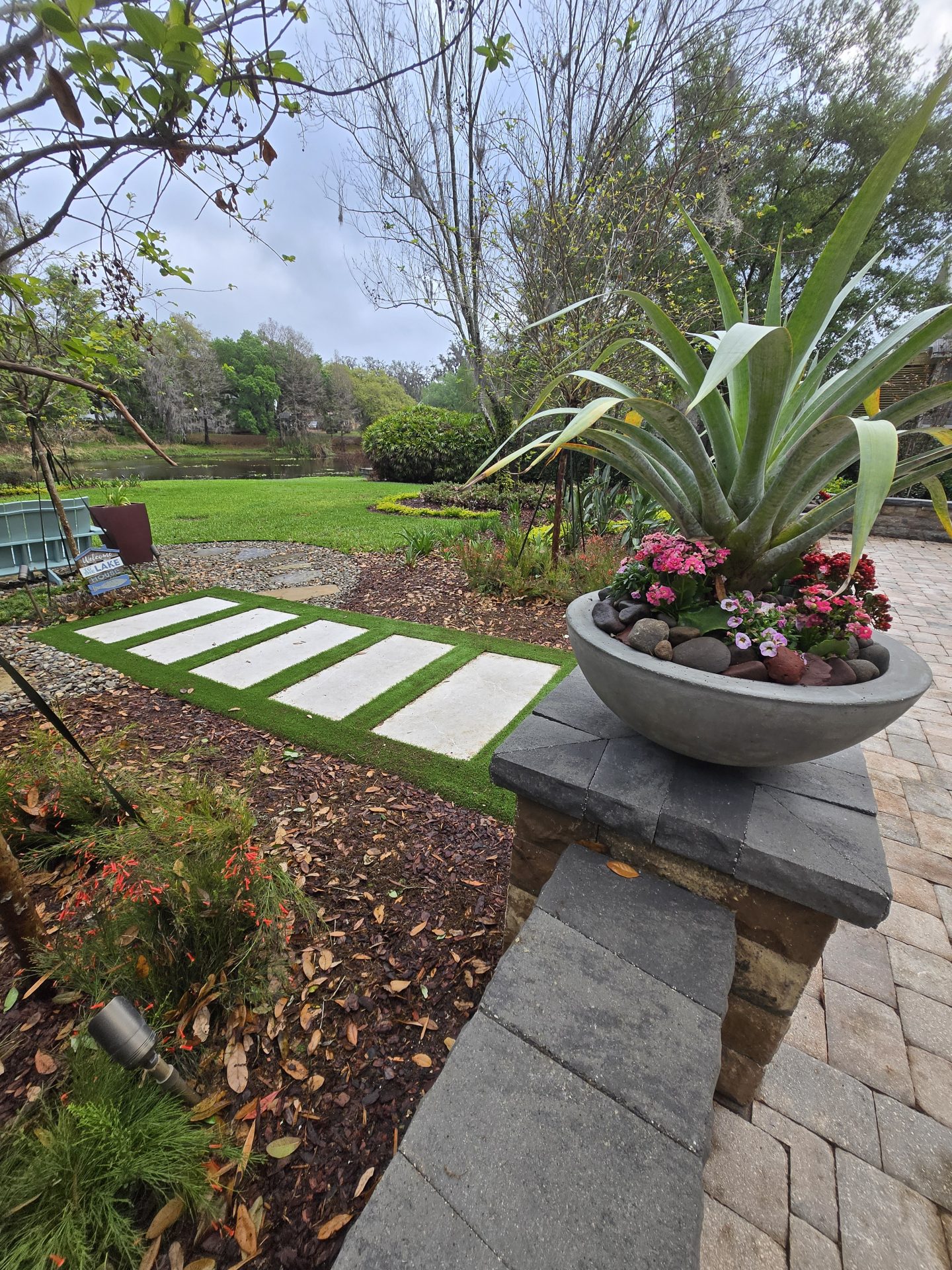
Every homeowner with a flooded yard tends to describe the issue using the exact same phrasing: “My yard holds water.” However, that singular description covers a multitude of entirely unrelated systemic failures. Sorting these failures takes only a few minutes of observation, and you can usually answer the necessary diagnostic questions simply from memory of the last major storm. You must determine where the water originates and where it ultimately stalls out, as the respective fixes share absolutely no common ground.
- Indoor fixtures, showers, floor drains, or sewer cleanouts bubbling up: This indicates a main line blockage, collapsed sewer pipe, or indoor plumbing failure. Who to call: A licensed plumbing contractor.
- Concentrated streams arriving directly against the foundation during rain: This points to clogged, sagging, badly seamed, or undersized roof gutters. Who to call: A gutter or roofing specialist.
- Standing water on streets, bubbling curb inlets, or overflowing subdivision ponds: This signals a municipal infrastructure capacity issue or a blockage in the public stormwater system. Who to call: Your county or city stormwater division (In Orange County, you can report public infrastructure and stormwater issues by calling 311).
- Standing pools on the lawn, saturated turf, or low spots away from the home: This is caused by lot grading, soil compaction, high water tables, or subsurface flow issues. Who to call: A licensed landscape contractor and drainage specialist (like JM Landscape).
Gutter and Downspout Discharge
Roof water represents the largest single volume of water arriving on a standard suburban Central Florida lot during a storm. If water is pooling immediately near the footprint of the house while the rain is actively falling, the culprit is almost always the roof drainage system. A gutter that is clogged with oak leaves, sagging off the fascia board, or leaking heavily at a corner joint will send a concentrated, high-velocity stream of water to one localized spot against the foundation.
If this is happening, the first call is to a gutter or roofing company. Standing outside with an umbrella during a storm and actively watching where the roof water cascades off the eaves is the most valuable diagnostic step a homeowner can take. Keep in mind, this is not always entirely separate from yard drainage. Roof water that discharges from a downspout into the middle of a lawn still needs a path to leave the turf. But identifying the gutter as the primary failure point changes what the very first repair must be.
Plumbing and the Sewer Connection
If water is backing up from a shower drain, a toilet, or a floor drain indoors, you are looking at a strict plumbing emergency. The same applies to water bubbling up from the sanitary sewer cleanout pipe located out by the street. When a blockage sits on the municipal side of that sanitary sewer connection, the local water utility company may actually help with the physical work or cover the cost of the repair. That phone call to your water provider is always worth making before hiring a private plumber to run a camera down the line.
The Law of the Lowest Point
For everything else- the soggy lawns, the muddy ruts, and the corners of the yard that stay wet for more than 24 hours after the rain stops- the trade that pinpoints the cause is a landscape drainage professional.
Before making that call, understand one critical concept: a puddle marks where the water stopped, not where the problem started. The water arrived from a higher elevation, crossed the turf, and stalled at the lowest possible topographical point it could reach before losing momentum. Homeowners often try to fix this by purchasing bagged topsoil and filling in the low spot. All this accomplishes is moving the stopping place a few feet in another direction. Nothing about the physics of the arriving water has changed, meaning the puddle simply relocates after the next storm. To permanently eliminate the puddle, you must call a contractor who knows how to control the water’s path before it ever reaches that low point.
Part 2: Municipal vs. Private Water (What Belongs to Orange County?)
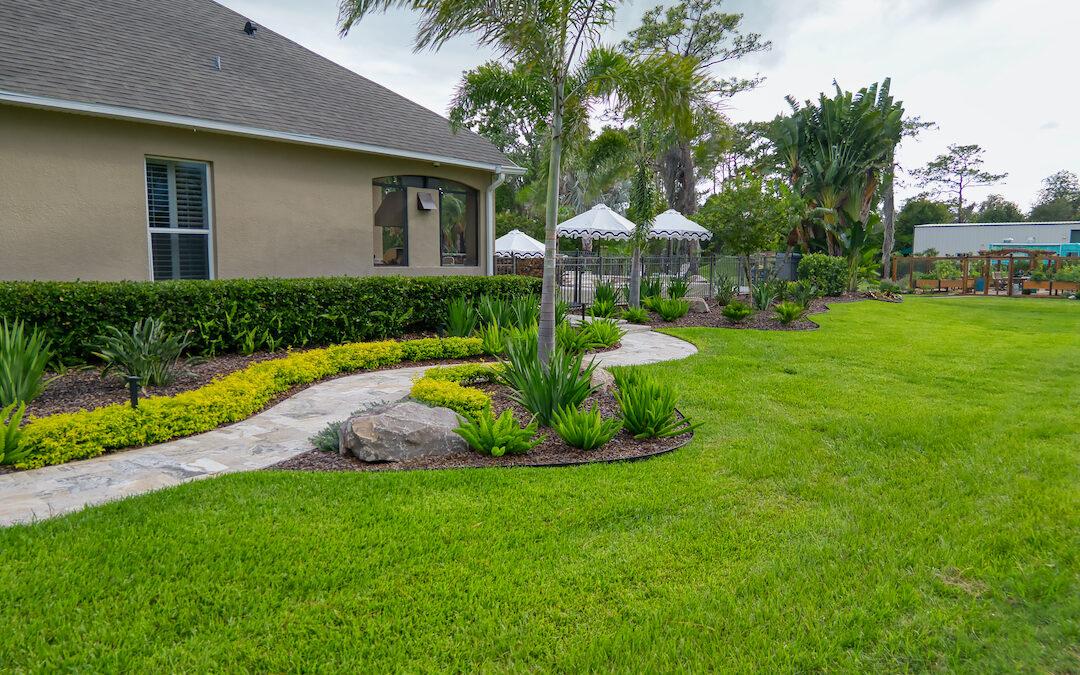
A surprisingly large portion of the water a homeowner looks at during a severe weather event does not actually sit on their private property, and more importantly, is not theirs to legally fix. Understanding the strict boundaries of municipal infrastructure is vital.
Orange County, Seminole County, and Lake County operate large-scale Municipal Separate Storm Sewer Systems, commonly abbreviated in the engineering world as MS4. The MS4 is the massive, interconnected network the county utilizes to move stormwater off public land, out of the roadways, and into designated retention areas to prevent catastrophic regional flooding. The storm drain grate in the middle of your street, the concrete curb inlet on the corner of your block, and the large retention pond sitting behind your subdivision are all critical components of this municipal system.
The Practical Boundary Line
This division of ownership has a very strict practical consequence: a private homeowner does not hire a contractor to work on county infrastructure, and absolutely no reputable landscape contractor will alter, cut into, or modify it.
Any private yard drainage system installed on a residential lot must account for the public system without illegally tying into it. The system designer must know exactly where the public water goes, the elevation of the curb, and how high the street water typically backs up during a torrential downpour. Because municipalities generally require that lot water percolate within the landscape rather than being artificially pumped directly into the street, a contractor must design a system that keeps your private water private.
When to Escalate to the County
Where the problem itself is demonstrably public, the homeowner must report it rather than attempt to buy a private fix for it. Examples of municipal failures include:
- A curb inlet that is completely choked with yard debris, trash, or sediment.
- A street drain that aggressively surcharges (bubbles up like a fountain) instead of taking water in.
- A subdivision pond outfall structure that is blocked, causing the pond to breach its banks and creep into residential backyards.
In these scenarios, Orange County’s Environmental Protection Division handles stormwater questions. The County also routes public infrastructure reports through its 311 Help and Info system.
It is important to be realistic about the limits of municipal help. The County’s official stormwater resources heavily emphasize their pollution-prevention role and the 311 reporting system, but they rarely provide a clean, easily readable dividing line between where County responsibility ends and a private homeowner’s responsibility begins. A homeowner cannot rely on the county to fix a soggy backyard. What you can do is rigorously report what is failing in the public right-of-way. Once the county clears the street drains, you must then get your lot looked at separately, because the grading, swales, and subterranean pipes on your specific parcel of land remain private work.
Part 3: Uphill Neighbor Runoff & Florida Surface Water Law
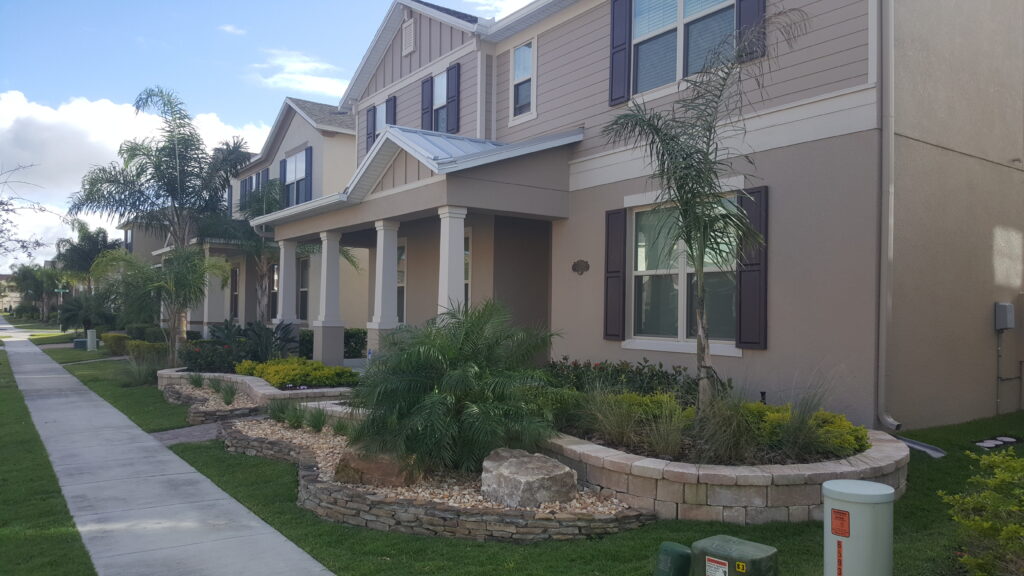
When water flows down from an adjacent property and floods a yard, homeowners almost universally assume that the law is strictly on their side and that the uphill neighbor can be forced to pay for the fix. This is the area of yard drainage that causes the most neighborhood friction, and it is worth reading the legal realities carefully before doing anything drastic.
The “Reasonable Use” Rule
In Florida, surface water disputes are generally governed by the “reasonable use” rule. This legal standard has been in place since the Florida Supreme Court handed down its decision in Westland Skating Center, Inc. v. Gus Machado Buick, Inc., 542 So. 2d 959 (Fla. 1989).
Under the reasonable use rule, a lower landowner who is receiving excess water from an uphill neighbor’s property improvement must prove in court that the neighbor’s improvement was legally “unreasonable.” When these disputes escalate, the court compares the actions of both property owners to reach a fair determination based on the totality of the circumstances.
Here is the hard truth that catches homeowners off guard: a neighbor is legally allowed to improve their own lot. They can build a pool deck, pour a patio, or install a new driveway. The mere fact that this new hardscape sends some displaced surface water downhill onto your property does not, by itself, make the neighbor strictly liable for your flooded yard. The legal burden of proof sits squarely with the person receiving the water to show that the upper owner acted with negligence or unreasonableness.
The Mistake to Avoid: The Retaliatory Berm
Because the law runs both ways, lower landowners often make a catastrophic error in execution. Under Florida law, a lower property owner may not intentionally build a barrier that creates an obstacle to the natural drainage resulting from a reasonable use by the upper owner.
If your uphill neighbor installs a permitted pool deck, and you react to the new runoff by hiring a landscaper to push up an earthen berm or build a concrete retaining wall right along the property line to block the water, you can end up being the party in the wrong. By actively damming the water and forcing it to flood the uphill neighbor’s yard, you have created a liability for yourself. The instinct to block the water is entirely understandable, but the execution is a legal landmine.
The Illusion of Permitting Safety
Permits do not cleanly settle these disputes, either. Work that alters how surface water exits a Central Florida lot often falls under the jurisdiction of a local water management district’s Environmental Resource Permit (ERP). However, holding an ERP does not automatically preempt a neighbor from filing a common-law drainage claim against you.
That being said, if a neighbor’s permitted project is designed to hold its post-development water discharge at rates closely matching the pre-development rates for a standard design storm (commonly engineered for the 25-year storm event), that neighbor is in a very strong, highly defensible legal position. Proving they acted unreasonably becomes incredibly difficult.
The Productive Path Forward
This legal reality leaves a flooded homeowner with a much narrower, but ultimately more useful, path than initiating a multi-year neighborhood lawsuit. If water is arriving from an uphill property, the most productive question to ask is: What can my lot do to receive this water, capture it, and move it safely away from my foundation?
By focusing on internal lot management, such as installing catch basins along the property line or grading a proper swale, the work remains entirely inside your own control. It does not depend on proving anything in court, demanding money from a neighbor, or waiting for code enforcement to intervene.
Part 4: What the First Site Visit Actually Looks Like
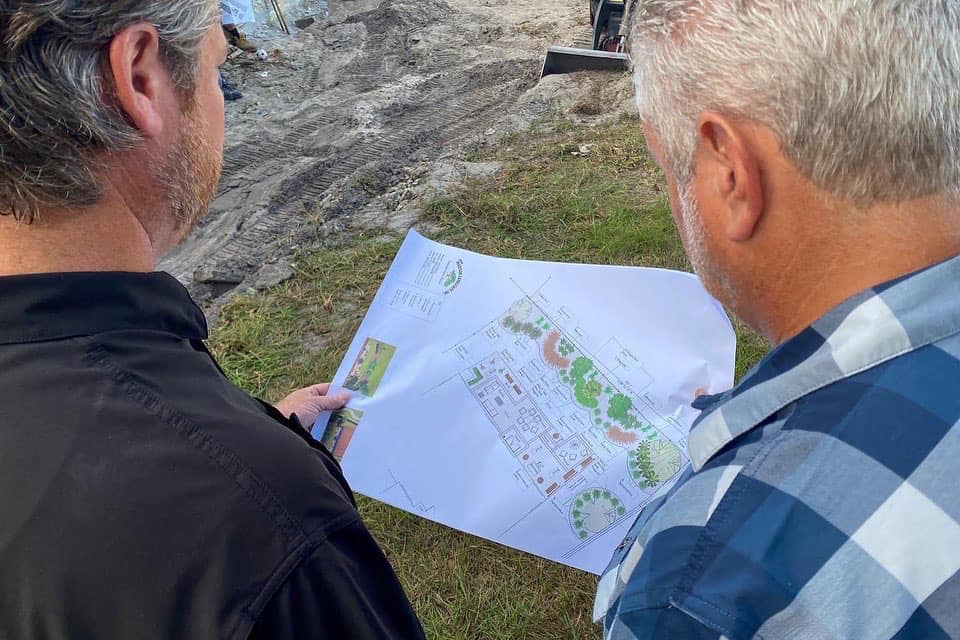
Once you have ruled out the roofers, the plumbers, and the county, it is time to call a landscape drainage professional. But what should that first visit actually entail? An accurate diagnosis is the foundation of a successful drainage project, and it requires specific evidence, measurements, and credentialing.
The Storm-Day Evidence Protocol
Before JM Landscape steps foot on a property to inspect a wet yard, we ask the homeowner for one critical piece of evidence: photos and videos of the standing water, taken while the storm is actively happening and before the yard has a chance to drain.
There is a highly practical reason behind this request. A drainage contractor almost always arrives for a consultation on a sunny, dry Tuesday afternoon. When we walk the yard, the turf usually looks perfectly fine. But the physical shape of a puddle, exactly where its outer edge sits, how many inches deep it gets against the foundation, and which direction the surface ripples are moving, that is the undeniable physical evidence of what the water is doing. All of that evidence disappears into the sandy Florida soil within a few hours.
A 30-second smartphone video shot from the back patio door during a torrential downpour, combined with a few photos taken from different corners of the yard while the water is still at its peak, tells a professional contractor infinitely more than a full dry-day walkthrough ever could.
The Diagnostic Process
The primary job of the first site visit is to unequivocally find the root cause before ever naming a fix. Any company that immediately quotes you a price for a French drain before they have mapped the elevations of your yard is simply guessing with your money.
The diagnostic phase involves:
- Tracing Origin Points: Working out exactly where the highest volume of water is arriving from (downspouts, uphill neighbors, natural grade).
- Locating Collection Zones: Identifying the structural low points where the water ultimately stalls.
- Measuring Fall: In Central Florida, the difference between a suburban lot that drains perfectly and one that floods chronically is often a matter of a few inches of slope spread across a span of 50 to 100 feet. The human eye cannot accurately estimate a two-inch drop over that distance. We must measure the elevations.
- Assessing Permeability: Determining if the ground will accept water at all. If heavy construction equipment compacted the soil during a recent pool installation, the rain simply cannot soak through the surface tension, regardless of the yard’s slope.
The Licensing Question Every Homeowner Must Ask
During this first visit, a homeowner should ask the contractor two distinct questions in return. The first is: “Who actually executes the work?” A company that diagnoses the issue but then subcontracts the heavy machinery and pipe-laying to a third party has a vested interest in selling whatever specific fix their subcontractor prefers. At JM Landscape, we do all of our drainage work in-house. We own the initial diagnosis, the trenching, the pipe laying, and the final grade, meaning we take full accountability for the result.
The second crucial question is: “What specific license do you hold?”
Under Florida statute s. 489.105(3)(m), sanitary drainage and storm drainage facilities sit explicitly within the plumbing contractor’s scope of work, which includes any excavation work incidental to it. Furthermore, storm sewer collection systems fall under the underground utility and excavation contractor’s scope under s. 489.105(3)(n).
The state statute names absolutely no exemption from contractor licensing for excavation, grading, or landscaping work. Moving massive amounts of earth and installing subterranean storm drainage is licensed, regulated contracting under state law. Asking a company to provide their licensing credentials before they fire up a skid steer, cut into your final grade, and run PVC pipe across your property is a fair, normal, and highly protective question. The ambitious lawn maintenance guy who offers to dig a trench for a few hundred bucks on a Saturday is operating outside the bounds of professional licensing, which brings us to the ultimate scope of the project.
Part 5: So, Is It Going to Be a Big Job?

When homeowners ask, “Is this going to be a massive, expensive project?” the most honest answer at the very beginning of the site visit is that nobody knows yet. Three specific variables dictate the final size, scope, and cost of a yard drainage job, and the first visit is explicitly meant to establish all three.
A. The True Cause of the Flooding
A downspout that is actively dumping 500 gallons of roof water directly into a flat garden bed is a relatively small, localized correction. Conversely, a large backyard that has zero topographical fall and absolutely no natural outlet to the street requires a heavily designed, engineered system to capture and move the water. From the vantage point of the back door, these two yards look identical during a thunderstorm, they are both underwater. But the required fixes sit at opposite ends of the pricing and installation spectrum.
B. Municipal Permitting and Discharge Constraints
The second variable is where the municipality legally allows the water to end up. These rules differ drastically from one city or county to the next. Generally, water must be managed and allowed to percolate within the landscape; it cannot simply be piped and blasted out onto the public sidewalk.
On a lot with no natural low point to utilize, this regulatory constraint forces a contractor to build a much longer underground pipe run to find a suitable discharge zone, which subsequently drives up the depth of the trench required to maintain gravity fall. Furthermore, local codes dictate engineering requirements. For example, in the City of Orlando, anytime a project adds 25% to the impermeable surface ratio of a lot, the city requires a licensed engineer to formally draw up the drainage site plan. Regulatory requirements like this inherently expand the scope of the project.
C. Lot Size, Access, and Installation Time
What ultimately prices the job is the linear footage of the pipe required, the total cubic volume of soil that must be cut, moved, and hauled away, and how efficiently a crew can complete that installation.
Access is the ultimate wildcard. A compact excavator that can easily drive through a wide double-gate into a backyard can dig a 100-foot trench in a matter of hours. If your property only has a narrow, three-foot side yard gate, that exact same trench must be dug by hand, and the dirt must be hauled out via wheelbarrow. What takes hours with a machine could take days manually. Therefore, what moves a quote up or down is primarily the size of the lot and the property’s physical access limits.
The Cost of Doing It Cheaply
Project scope is also where hiring the cheap, unlicensed option usually becomes wildly expensive. We frequently receive calls to repair or tear out drainage systems that another maintenance company or ambitious amateur installed backwards. If a pipe is laid with the gravity fall running toward the house instead of away from it, the system acts as a water-gathering funnel that actively delivers floods to the foundation.
Undoing a botched installation means we have to dig out and dispose of the entire ruined run before the real, mathematically correct fix can even begin. A system built with the fall pointing in the wrong direction is significantly worse, and far more damaging, than having no system at all.
Part 6: Making the Call (Your Pre-Consultation Checklist)
For a Central Florida homeowner who is tired of watching the same corner of their yard turn into a swamp every summer, following a strict sequence of actions is the best way to avoid wasting money on the wrong trades or fighting unwinnable neighbor disputes.
Before you pick up the phone to schedule a site visit, ensure you have completed this brief checklist:
- Capture the Evidence: Photograph and video the water while it is actively standing during a heavy rainstorm. Date the files so a pattern across multiple storms becomes obvious.
- Check the Roof: Confirm visually that your gutters are clear and note exactly where all roof downspouts discharge into the yard.
- Report Public Failures: If water is surging from street drains, curb inlets, or subdivision ponds, report it immediately to Orange County 311 or the EPD.
- Document Property Changes: Make a list of any recent structural changes to your lot or the neighboring lots (new pools, patios, fences, or removed trees) that may have altered surface flow.
- Leave the Property Line Alone: Do not build retaliatory berms or walls to block water arriving from an uphill neighbor.
Once you have gathered this information and confirmed that the issue lies within your lot’s private grading or subsurface, it is time to bring in a credentialed professional who works on grade and pipe.
At JM Landscape, clients trust us for the big, complicated, heavily engineered drainage jobs just as much as the straightforward residential corrections. We handle drainage across Orlando and Central Florida completely in-house, ensuring that the team who diagnoses your property on day one is the same team executing the final fix.
Bring your storm-day photos and videos to that first conversation, and let our team find and fix the definitive cause of your standing water.
Tags: